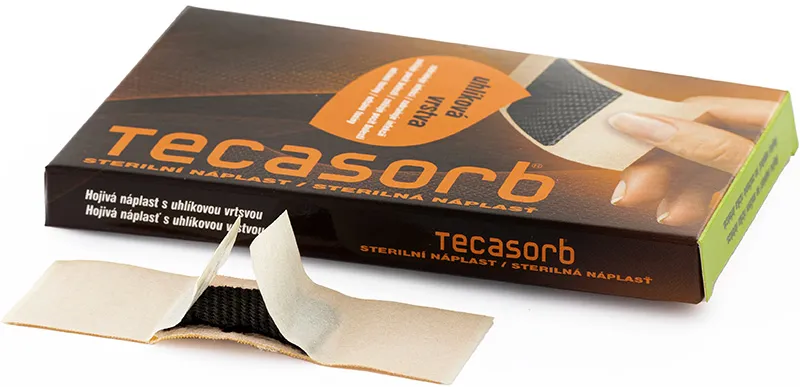
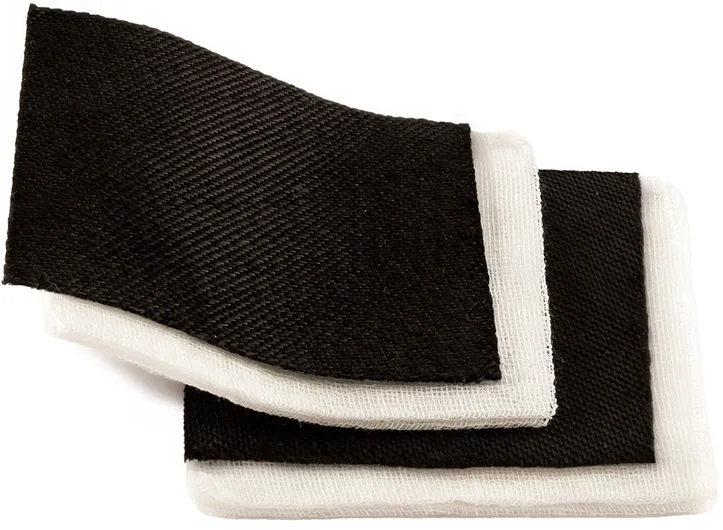
TECASORB sterile adhesive plaster is a textile elastic fabric on which there is placed a pad of active carbon. It is used in dermatology, surgery and during first aid to cover minor wounds, abrasions, ulcers, wounds from insect bites (in such cases it is recommended to dampen the carbon layer before application).
It is also used in dialysis to cover wounds after removal of dialysis needles where it accelerates “squeezing“ during dialysis procedures and improves subsequent healing (in this case it is used in dry state).
An advantage of the product is its high absorption efficiency, further rapid pain relief in a wound and a highly efficient anti-infective barrier.
Elastic fabric, adhesive, carbon pad, cover paper layer.
| Length (cm) | Width (cm) |
| 8 | 2,5 |
| 8 | 5 |
Box of 3 pieces (2 pcs 8 x 2.5 cm and 1 pc 8 x 5 cm). Box of 10 pieces (10 pcs 8 x 2.5 cm). Individual boxes are packed in a carton of 20 pieces.
Risk class Is
The adhesive plaster consists of a textile elastic carrier coated with an adhesive. The carbon textile is in principle a black sorbent, which is formed during thermal processing of hydrate-cellulose fiber. With a special carbonization technology, this textile gains high absorption capacity, which is reinforced by using of a non-woven textile layer. The result is a soft, pliable pad that can adapt to unevenness of the body surface very well. The application of the adhesive plaster is very easy and quick, removal from the wound is also trouble-free and causes no trauma.
TECASORB is an absorbent, porous and permeable dressing with a layer of active carbon suitable for absorbing of organic substances, microorganisms, toxins, and unpleasant odor. TECASORB is classified in the category of covering compresses. Therefore, it is used as a disposable covering of acute and chronic wounds. But its advantage is also high absorption efficiency, it has a strong impact on accelerating stopping of bleeding, quickly reduces sensation of soreness in a wound and creates a highly efficient anti-infective barrier. All this occurs without using any medication, only due to physical properties of the assembly used.
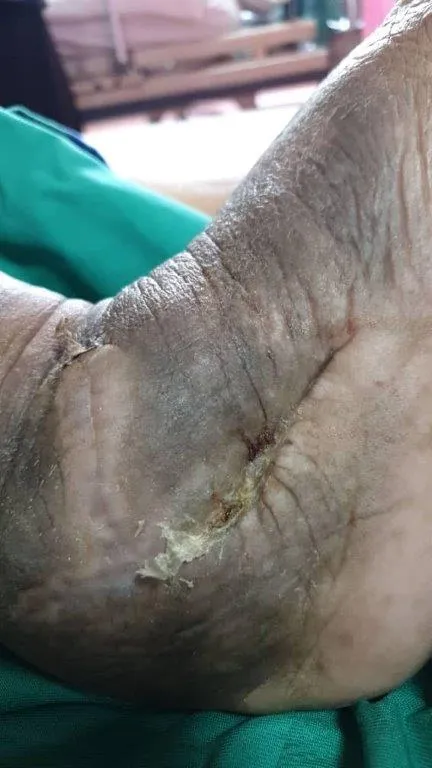
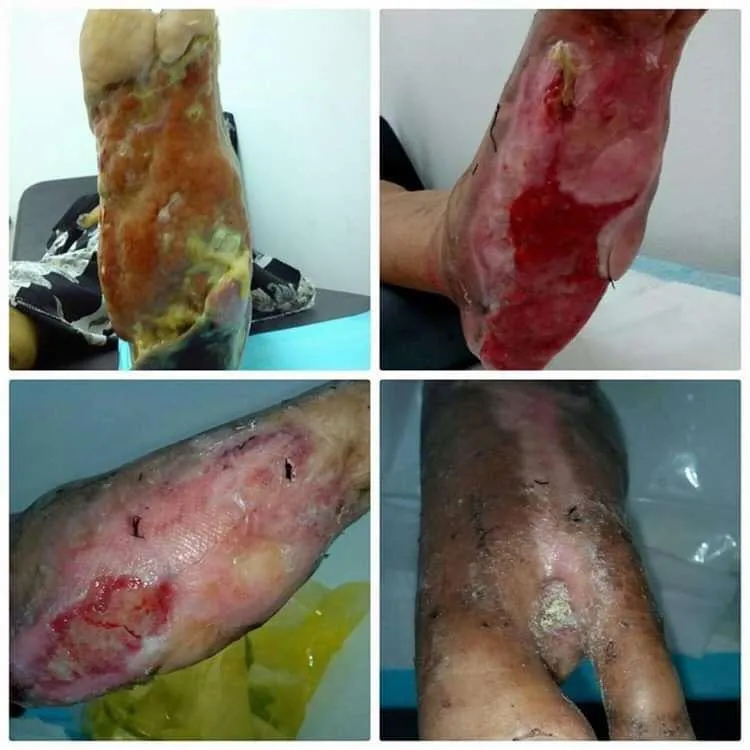
Thanks to its unique production technology it is thus suitable as natural antibacterial protection for cleansing of infected, non-healing chronic wounds (especially leg ulcers, bedsores, skin problems associated with diabetes and other similar ulcerative surfaces).
TECASORB is also excellent for stopping bleeding, especially in fresh injuries bleeding from capillaries and smaller vessels, in surface injuries of skin cover, in bleeding from intraoperatively disrupted adhesions or during surgery on parenchymatous organs. It can be used also as a first aid for gunshot and stab injuries within applied compression.
The product is also suitable for use in home conditions, no special nursing skills and abilities are necessary. For most patients, simple training with a demonstration and basic guidance not exceeding five minutes is sufficient to master the issues of self-treatment. Stabilized wounds, in most cases, no longer require any additional cleansing during changes of dressing, except for wounds, where the infection has not yet been controlled with generally administered antibiotics.
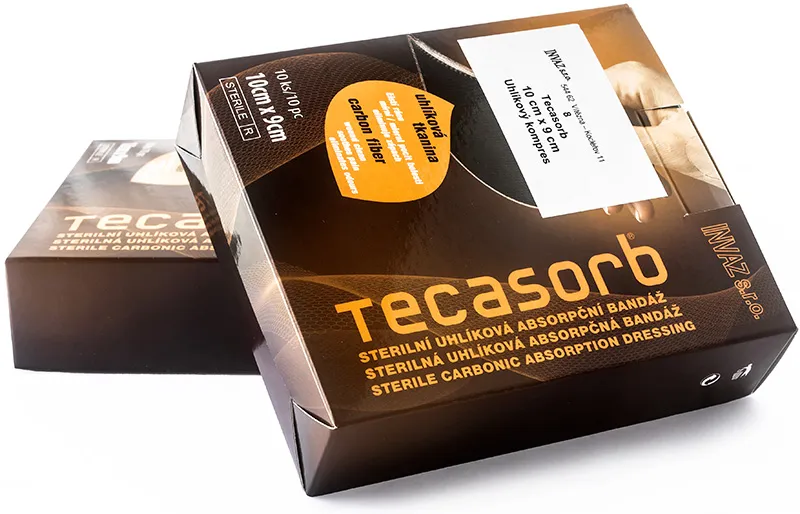
TECASORB dressing is made of several layers. The upper layer is from a non-woven textile made of a mixture of viscose and polypropylene, with a carbon fabric underneath.
The product is complemented with a folded gauze compress, which is freely included and serves to increase the absorbency of the product.
| Lenhth (cm) | Width (cm) |
| 10 | 9 |
Packed in aluminium foil and boxes of 10 pieces (supplied in cartons of 1,000 pieces).
Risk class IIb
When applied to the wound, the inert, nonallergiing carbon textile absorbs fluids from a wound very quickly. The final effect of this action is haemostatic. The carbon textile, together with a layer of non-woven textile, which is very tightly connected to the carbon textile, causes a strong diffusion process, in which acid metabolites and free radicals are continuously aspirated from the wound. This enhances the antiseptic capacity of the dressing. At the same time, the pain sensation is reduced.
Carbon textile is in principle a black sorbent, which is formed during thermal processing of hydrate-cellulose fiber. With a special carbonization technology, this textile gains high absorption capacity. Purity of carbon is 99.9%. Using a sophisticated construction, we obtain in fact a soft, pliable bandage that can be shaped, cut and is highly adaptable to unevenness of the body surface. Its application is very easy and quick, removal from the wound is also trouble-free and causes no trauma. Patient comfort and painlessness are maintained during changes of dressing. TECASORB contributes significantly to wound cleansing by creating of adequately moist environment and generally accelerates the healing process.
The medical device TECASORB based on microfilamentary activated carbon potentiated by the effect of diffusion pump provides optimum conditions for harmonized healing of wounds that are otherwise difficult to heal. By significantly speeding up the process of hemocoagulation it helps to stop bleeding and reduces penetration, expansion and effect of exogenous toxins in a body.

Activated carbon (adsorption carbon) is a product made from coal, wood or peat1. It has a porous structure and a large internal surface (400–1 500 m2/g) and can adsorb a wide range of substances, thanks to which it is used both in industry within various filtration processes and in modern medicine for the therapy of acute diarrhea, in case of acute intoxication, when it prevents the absorption of a poisonous substance into the body, and also as an absorbent dressing in the treatment of superficial and deeper wounds2.
The sharp rise in the level of knowledge over the past two decades has enabled the construction of a new generation of dressing materials that use the unique properties of special forms of activated carbon collectively referred to as potentiated microfilamentary bioactive carbon. Among other commonly used forms, it stands out for its chemical purity and significantly greater absorption capacity. This form of bioactive carbon is one of the two basic raw materials of the active double layer of TECASORB dressing, which is intended for wide use in human and veterinary medicine.
Physically and chemically activated carbon does not directly participate in the metabolic processes taking place in an organism by supplying it with foreign substances or inducing the formation of substances previously absent in the body. Its bioactivity consists in the ability to physically and chemically bind a wide range of substances and particles present in the wound that are not desirable there. From the point of view of healing, bioactive carbon is able to influence the behaviour of the tissues with which it is in direct contact, thanks to its extremely large surface area and physicochemical properties. Due to the generally known properties of activated carbon as a detoxifying agent, it is unlikely that it could have a toxic or irritating effect on living tissue.
1 HOUSECROFT, Catherine; SHARPE, Alan. Anorganická chemie. 1. vyd. Praha: VŠCHT, 2014. 1119 s. ISBN 978-0273-74275-3. S. 417.
2 Aktivní uhlí – Wikipedie (wikipedia.org)
Instructional videos for product application:
Use of TECASORB absorbent dressing in a diabetic patient after repeated amputations – verbal description.
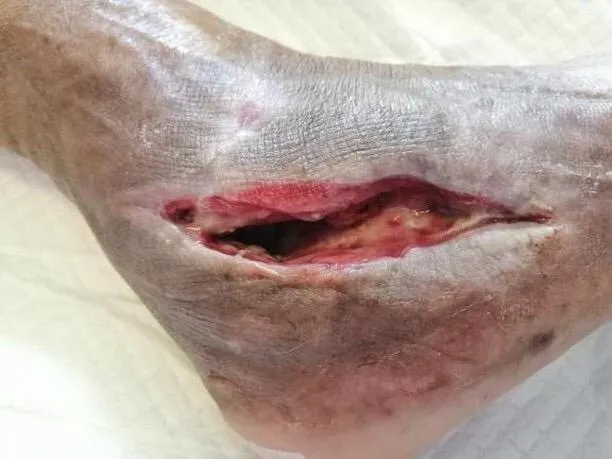
Use of TECASORB absorbent dressing in a patient with chronic venous insufficiency (CVI) with subsequent formation of ulcus cruris on the left lower leg – verbal description
Use of TECASORB absorbent dressing in a patient with chronic venous insufficiency (CVI) with subsequent formation of ulcus cruris on the right lower leg – verbal description
Use of TECASORB absorbent dressing in an extremely obese patient with chronic venous insufficiency (CVI) and simultaneous hypertension – verbal description
Use of TECASORB absorbent dressing in a hypertensive patient with leg varices – verbal description
Use of TECASORB absorbent dressing in a patient with chronic venous insufficiency (CVI) and small ulcerations on the right lower leg. An example of how a patient improperly treats a wound at home – verbal description
In order to provide the best possible service, we use technologies such as cookies to store and/or access device information. Consenting to these technologies will allow us to process data such as browsing behavior or a unique ID on this website. Disagreeing or withdrawing consent may adversely affect certain features and functions.